

How Money Flows Through an Economy and How to Build Financial Resilience
Jul 27
10 min read
Money rarely sits still for long. A paycheck becomes rent, groceries, savings, debt payments, taxes, and someone else’s income. That income becomes another round of spending. The same dollar can pass through many hands, supporting families, businesses, public services, and banks along the way.
When the flow is steady, life feels more predictable. People get paid, companies hire, lenders extend credit, and households plan ahead. When the flow slows or breaks, stress shows up quickly. Jobs become less secure. Prices feel heavier. Debt gets harder to carry. Savings matter more.
Understanding how money moves through an economy does not require a finance degree. It starts with a simple idea: your personal finances are connected to a much larger system. The better you understand that system, the better you can prepare for shocks, spot risks early, and build financial resilience without relying on luck.
This article is informational only and does not provide personal financial advice. For decisions involving investments, taxes, or debt, consider speaking with a qualified professional.

Money moves in a loop between households, businesses, banks, and government
The economy can feel abstract, but the core loop is easy to see.
Households provide labor. Businesses pay wages. Households spend part of those wages on goods and services. Businesses use that revenue to pay workers, suppliers, landlords, lenders, and owners. Governments collect taxes and spend money on services, contracts, benefits, infrastructure, and payroll. Banks move money between savers and borrowers.
That loop has millions of paths, but most money flows through five major channels.
Wages turn work into purchasing power
For most households, wages are the main entry point. A person works at a store, hospital, construction site, school, restaurant, factory, delivery route, or home-based business. The employer pays that worker. The worker then uses that income to pay for daily life.
This is why employment matters so much to the economy. A lost job affects more than one household. It can reduce spending at local stores, restaurants, repair shops, and service providers. If many households cut back at once, businesses may reduce hours, delay hiring, or close locations. One weak link can put pressure on the loop.
Spending becomes income for someone else
Every purchase sends money onward.
A grocery bill helps pay cashiers, truck drivers, farmers, warehouse workers, utility companies, and food manufacturers. A rent payment may cover a landlord’s mortgage, property taxes, repairs, insurance, and income. A car repair pays the mechanic, parts supplier, shop owner, and possibly a lender.
This is one reason recessions can spread. When households pull back on spending, businesses feel it. When businesses feel it, workers feel it. Then households spend even less.
The reverse can also happen. When more people earn and spend, businesses may expand, hire, and place larger orders. Growth feeds on motion.
Savings and credit move money across time
Savings shift money from today into the future. Credit pulls future money into today.
A savings account gives a household protection and options. The bank can use deposits, under regulated conditions, to make loans. A mortgage lets a family buy a home without waiting decades to save the full price. A business loan helps a company buy equipment before it has the cash on hand.
Credit can support growth, but it can also add fragility. Debt payments are fixed even when income falls. When many households or businesses carry too much debt, a slowdown can become more painful.
Good debt management is part of survival because debt reduces flexibility.
Taxes and public spending redirect money
Taxes move money from households and businesses to government. Public spending sends money back into the economy through wages, contracts, benefits, grants, and services.
A road project pays construction crews and suppliers. Social Security checks become grocery purchases, rent payments, and medical bills. Public school systems pay teachers, bus drivers, cafeteria workers, and maintenance staff. Emergency aid can help households keep spending during hard times.
People often debate the right level and type of taxes and spending. Still, the basic flow is clear: government does not sit outside the economy. It is one of the main channels through which money circulates.
Imports and exports connect the local loop to the world
Money also crosses borders.
When a U.S. household buys an imported product, some money leaves the domestic economy and pays foreign producers, shippers, and suppliers. When a U.S. company exports aircraft parts, software, food, machinery, or entertainment, money flows in from abroad.
Global trade can lower prices and widen choices. It can also expose households and businesses to supply shocks, currency changes, and overseas conflicts. A delay at a port or a shortage of a key material can ripple into prices at home.

Prices, interest rates, and confidence change the speed of the flow
Money does not always move at the same speed. Sometimes households spend quickly because jobs feel secure and prices seem manageable. Sometimes people hold back because rent, food, gas, or loan payments absorb more income.
Three forces have a major effect on the pace of money: prices, interest rates, and confidence.
Inflation changes what each dollar can buy
Inflation means prices rise across many goods and services. A small amount of inflation is common in a growing economy. High inflation is different. It can make households feel poorer even when income stays the same.
If groceries, insurance, rent, utilities, and transportation all rise faster than wages, households must make tradeoffs. They may delay medical care, repairs, travel, education, or savings. Businesses then see demand shift. Some companies raise wages or prices. Others cut costs.
Inflation especially hurts people with little room in their budget. A household with extra cash can absorb higher utility bills. A household already living paycheck to paycheck may need to use credit cards or skip essentials.
Interest rates set the price of borrowing
Interest is the price paid to borrow money. When rates are low, mortgages, car loans, and business loans tend to be cheaper. Borrowing often increases. That can boost spending and investment.
When rates rise, borrowing becomes more expensive. Mortgage payments climb. Credit card balances cost more to carry. Businesses may delay expansion. Households may postpone buying cars or homes.
Higher rates can slow inflation by cooling demand, but they can also strain borrowers. This is why high-interest debt is risky. It can grow fast and crowd out everything else.
Confidence affects decisions before numbers do
People make financial choices based on what they expect.
If workers believe their jobs are safe, they may spend more freely. If business owners expect strong demand, they may hire or buy equipment. If families expect layoffs, they may cancel trips, eat out less, or build cash.
Confidence can shift before official data shows trouble. News of layoffs, rising prices, bank stress, or political conflict may cause people to pull back. Once enough people pull back, the slowdown can become real.
That does not mean fear should drive every decision. It means a smart plan should work in both good times and bad times.
Shocks reveal where the weak points are
A financial shock does not have to be dramatic to cause damage. A surprise car repair, medical bill, rent increase, reduced work hours, or family emergency can expose weak points in a household budget.
Large shocks work the same way across the economy. A recession, pandemic, banking crisis, energy price spike, supply shortage, or housing downturn tests the system.
The weak points are often predictable.
Too much fixed cost
Fixed costs are expenses that are hard to change quickly. Rent, mortgage payments, car loans, insurance, childcare, minimum debt payments, subscriptions, and utilities all fit this category.
The more income tied up in fixed costs, the less room there is to adapt. A household with low fixed costs can cut back temporarily and survive. A household with high fixed costs may run out of options fast.
Too little cash
Cash is boring until it is needed. Then it becomes power.
An emergency fund helps cover gaps without selling investments at a bad time or taking on expensive debt. It also buys time to make better decisions. A person with one month of expenses saved may handle a layoff differently than someone with no cash at all.
The common advice is to build three to six months of essential expenses, but that target can feel far away. The first goal is smaller: save enough to avoid panic when something minor goes wrong.
Income from one fragile source
A single paycheck can be stable, but it can also create concentration risk. If that job disappears, the whole household budget may shake.
Multiple income sources do not have to mean working every hour of the day. Resilience can come from a second adult’s income, part-time work, seasonal work, freelance skills, a small home business, rental income, dividends, or the ability to pick up temporary work.
The key is not constant hustle. The key is having more than one path to cash when conditions change.
Debt that grows faster than income
Debt becomes dangerous when balances rise while income stays flat or falls. Credit cards, payday loans, high-interest personal loans, and some buy now, pay later plans can create a cycle that is hard to escape.
The warning signs are clear:
Paying only minimums while balances grow
Using one debt to pay another
Needing credit for routine bills
Feeling afraid to check balances
Skipping savings because debt payments absorb all extra cash
Debt reduction is not just a math problem. It is a way to regain control over future income.

Financial resilience comes from cash flow, flexibility, and habits
Building resilience is not about predicting every crisis. It means creating a financial system that can bend without breaking.
A resilient household has three traits:
Money comes in from reliable or replaceable sources.
Essential expenses stay within a manageable range.
Cash and credit options exist before trouble starts.
Map the actual flow of money
Start with a simple cash flow map. Track what comes in and where it goes for one full month. Use a spreadsheet, notebook, or budgeting app. The tool matters less than honesty.
Group expenses into four categories:
Category | What belongs here | Why it matters |
Essentials | Housing, food, utilities, transportation, insurance, medicine | These must be protected first |
Debt payments | Credit cards, loans, student debt, car payments | These reduce future flexibility |
Future needs | Emergency savings, retirement, repairs, annual bills | These prevent new crises |
Lifestyle spending | Dining out, entertainment, upgrades, hobbies | These are the first places to adjust |
This map shows whether money is flowing toward stability or away from it. If all income disappears into essentials and debt, the system is fragile. If some income regularly moves into savings and future needs, resilience grows.
Build a small emergency buffer first
A starter emergency fund might be $500, $1,000, or one month of essential bills. The number depends on the household, but the purpose is the same. It creates breathing room.
Keep emergency money separate from everyday spending. A high-yield savings account can help, but access matters more than chasing the highest rate. Emergency funds should be safe, simple, and available.
Use the fund for real surprises, not normal expenses. Car repairs, urgent travel, medical copays, and temporary income gaps count. Holidays, routine maintenance, and annual subscriptions should become planned savings categories.
Lower the costs that trap you
Large fixed expenses shape financial life more than small purchases do. Cutting coffee will not repair a budget crushed by rent, car payments, and debt.
Look first at the costs that repeat every month:
Housing that consumes too much income
A car payment that limits savings
Insurance policies that have not been compared in years
Subscriptions that no longer add value
Phone, internet, or utility plans that can be changed
High-interest debt that keeps renewing itself
Some changes take time. Moving, refinancing, selling a car, changing childcare arrangements, or consolidating debt may not happen quickly. Still, naming the pressure point is the first step.
Protect earning power
Income is the engine of resilience. Savings matter, but the ability to earn again after a setback matters too.
Protect earning power by keeping skills current, maintaining professional relationships, and documenting work results. Build a basic resume before it is needed. Learn tools that are common in stable jobs. Keep licenses or certifications active when they are central to income.
For workers in unstable industries, a backup plan is practical. That might mean training for a related field, building a client list, learning a trade skill, or keeping a part-time income option open.
Use debt with caution and purpose
Debt can help build wealth when it funds assets, education, or tools that improve income over time. It can also weaken a household when it funds lifestyle spending that income cannot support.
A simple test helps: will this debt make future cash flow stronger or weaker?
A mortgage on an affordable home may create stability. A student loan for a field with strong earning potential may pay off. A credit card balance from routine overspending usually weakens future cash flow.
Paying down high-interest debt is often one of the clearest ways to improve resilience because it turns future income back into usable money.
A resilient life still participates in the economy
Survival does not mean hiding from the economy. It means participating with a margin of safety.
People still need homes, food, transportation, healthcare, relationships, education, and joy. Businesses still need customers. Communities still need exchange. The goal is not to stop spending. The goal is to spend in a way that keeps future choices open.
That means choosing habits that help money flow through life in a healthier pattern:
Spend less than comes in over time
Keep essential costs realistic
Save before emergencies arrive
Avoid debt that compounds against you
Grow skills and income options
Invest for long-term goals when the basics are stable
Share resources and support networks when possible
Community matters too. A resilient person benefits from neighbors, family, friends, local services, mutual aid, and trustworthy institutions. No household is completely separate from the wider system. During hard periods, practical support can be as valuable as money.
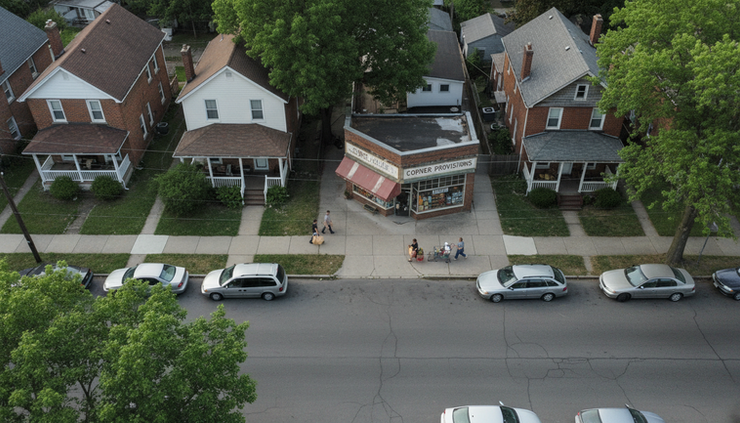
The main lesson is to control what you can
Money flows through an economy in cycles: wages, spending, saving, lending, taxes, investment, imports, exports, and public services. No one controls the whole system. Prices change. Jobs shift. Interest rates rise and fall. Shocks happen.
What can be controlled is the shape of a personal financial system.
A household with some cash, manageable fixed costs, useful skills, careful debt use, and a clear view of monthly cash flow has more room to adapt. It can handle delays, absorb surprises, and make choices under less pressure.
Start with the next dollar. Decide whether it should go to a bill, a debt, a savings buffer, a skill, or a need that prevents a bigger problem later. That small decision, repeated often, is how resilience is built.


Comments