

How to Budget When Money Is Tight
Aug 4
8 min read
When there is barely enough money coming in, a budget can feel like one more thing asking too much of you. But a good tight-money budget is not a spreadsheet full of perfect numbers. It is a short plan for survival, stability, and fewer surprises.
The goal is simple: know what must be paid first, decide what can wait, and keep as much control as possible over the next dollar that comes in.
This guide is informational only and is not financial advice. If debt, eviction, utilities, taxes, or legal issues are urgent, it can help to contact a qualified nonprofit credit counselor, legal aid group, or local assistance program.

Start with the money you actually have
A tight budget has to begin with cash flow, not wishes. That means looking at the money that is available now and the money that is likely to arrive before the next round of bills.
Start with these numbers:
Current checking account balance
Cash on hand
Expected paychecks
Benefits, support payments, or side income that are reliable
Automatic payments scheduled before the next payday
Do not count money that might arrive. A promised repayment, possible overtime, or a tax refund that has not landed yet should stay out of the plan until it is real.
Next, write down the date each expected dollar should arrive. This matters because being short on the 8th of the month is different from being short on the 28th. A bill due tomorrow needs a different plan than a bill due in three weeks.
A simple cash-flow list may look like this:
Date | Money in | Must pay before next income |
Friday | $850 paycheck | Rent balance, groceries, gas |
Next Tuesday | $120 side job | Phone bill, school lunch money |
Two weeks from Friday | $850 paycheck | Car insurance, utilities |
This kind of list removes some of the fog. It may not fix the shortage, but it shows where the pressure points are.
If the numbers look bad, pause before making payments at random. When money is tight, payment order matters. Paying the loudest bill first can leave no money for rent, food, or gas to get to work.
Protect the basics first
When there is not enough money for everything, the budget needs a priority system. Start with the needs that keep life stable and make it possible to keep earning income.
The first priorities are usually:
Housing
Food and basic household supplies
Utilities
Transportation
Required medical needs
Child care needed for work
Minimum payments on debts that protect essentials, such as a car loan if the car is needed for work
These are the “keep going” categories. They protect shelter, safety, health, and income.
After that, look at everything else. This may include subscriptions, streaming services, restaurants, delivery fees, extra data plans, clothing that is not urgent, gifts, entertainment, and nonessential shopping.
This is not about guilt. Some of these things may be small comforts during a hard time. The question is whether they fit after the basics are covered.
Try sorting expenses into three groups.
Keep | Cut for now | Decide later |
Rent or mortgage | Unused subscriptions | Medical bill payment plan |
Groceries | Takeout | Holiday spending |
Gas or bus fare | App purchases | Extra debt payment |
Utilities | Gym membership | School activities |
The “decide later” column matters. Not every choice is obvious, and not every bill has the same risk. If a medical bill, credit card, or old debt is competing with rent or groceries, the immediate survival expenses usually come first. Then call the other company and ask about options.
Many companies would rather set up a smaller payment than receive nothing. Ask for hardship plans, due date changes, fee waivers, or temporary lower payments. Get any agreement in writing if possible.
Build a bare-bones budget for the next 30 days
A bare-bones budget is temporary. It is the version of the budget used when there is little room for error. It focuses on essentials and gives every available dollar a clear job.
Start with take-home income for the next 30 days. Then subtract only the must-pay categories.
Here is a simple example:
Category | Amount |
Take-home income | $2,600 |
Rent | $1,150 |
Utilities | $220 |
Groceries | $450 |
Gas and transportation | $260 |
Phone | $70 |
Insurance | $160 |
Child care | $250 |
Minimum debt payments | $120 |
Remaining | -$80 |
This example shows a shortfall. That is stressful, but it is useful information. A budget that shows a negative number is not a failure. It is a warning light.
Once the shortfall is visible, there are only a few levers to pull:
Reduce a cost
Delay a payment
Increase income
Get assistance
Use savings if available
Sell something, carefully and only if it makes sense
The first place to check is flexible spending. Groceries, gas, and household items often have some room, though not always much. Cut carefully, because cutting food too hard can backfire.
For groceries, try a short list of low-cost meals that repeat well:
Oatmeal, eggs, toast, or fruit for breakfast
Rice bowls with beans, frozen vegetables, and salsa
Pasta with canned sauce and vegetables
Soup, chili, or stew that can stretch across several meals
Peanut butter sandwiches, tuna, or leftovers for lunch
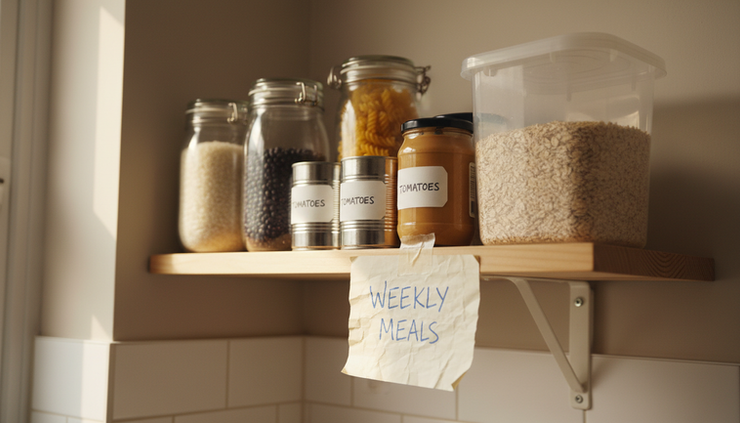
Plan around what is already in the kitchen first. Then buy what fills the gaps. A “use what we have” week can free up money without requiring a dramatic lifestyle change.
For transportation, combine errands when possible, carpool if safe and practical, or ask about reduced transit fares in your area. If driving is required for work, keep gas money protected. Saving $20 in the wrong place can cost much more if it puts a job at risk.
For subscriptions and memberships, cancel anything that is not essential right now. If canceling feels too final, pause it. Many services make it easy to restart later.
The point is not to live bare-bones forever. The point is to get through the tightest stretch with fewer overdrafts, late fees, and panic decisions.
Make a bill plan before the bills make one for you
Bills become harder to manage when they are scattered across emails, apps, envelopes, and memory. A bill plan puts them in one place.
List every bill with:
Company name
Amount due
Due date
Whether it is automatic
What happens if it is late
Contact information
Then mark each bill as urgent, flexible, or paused.
Urgent bills are tied to shelter, transportation, basic utilities, insurance, or court-ordered obligations. Flexible bills may allow a grace period, payment plan, or hardship option. Paused bills are nonessential expenses that can be canceled, delayed, or skipped.
If the full bill cannot be paid, call before the due date when possible. A short, direct script works best:
“I’m dealing with a temporary income shortage and cannot pay the full amount by the due date. What hardship options, payment plans, or fee waivers are available?”
Write down the date of the call, the person you spoke with, and what they said. If the company agrees to a new plan, ask for confirmation by email or text.
For credit cards, making at least the minimum payment can help avoid extra fees and protect the account from becoming more serious. But minimum payments should not come before food, rent, utilities, or transportation needed for work.
For medical bills, ask about financial assistance, income-based plans, or interest-free payment arrangements. Many hospitals and clinics have billing departments that can review options, but patients often need to ask.
For utility bills, check whether your provider offers budget billing, payment extensions, or hardship programs. Some areas also have nonprofit or government assistance for heating, electric, or water bills.
A bill plan can also prevent overdraft fees. Review automatic payments and turn off the ones that could hit when the account is too low. Autopay is helpful when there is steady cushion. During a cash shortage, it can create chaos.

Use small buffers to stop the spiral
When money is tight, even a tiny surprise can cause a chain reaction. A $35 overdraft fee can make the phone bill late. A late phone bill can add another fee. Then next payday starts behind.
The fix is a small buffer. Not a full emergency fund. Just a few dollars that do not get assigned immediately.
If possible, start with $10 or $20. Keep it in checking, savings, or cash, wherever it is safest from accidental spending. The purpose is to absorb small shocks:
A few extra gallons of gas
A school fee
A prescription copay
A higher-than-expected grocery total
A bill that clears earlier than expected
This buffer may get used quickly. That is fine. Rebuild it when the next money comes in.
Another useful tool is a “tiny sinking fund.” This means setting aside small amounts for expenses that are predictable but not monthly. Car registration, school supplies, holiday meals, and annual fees are common examples.
When there is no extra money, sinking funds may seem impossible. Start smaller than feels meaningful. Even $5 per paycheck can reduce future pressure.
It also helps to create a no-spend list for the rest of the month. This is not a moral judgment. It is a temporary rule that saves decision energy.
A no-spend list might include:
No takeout unless there is a planned reason
No new clothes unless required for work, school, or weather
No paid entertainment
No convenience store snacks
No online browsing when stressed
Then make a “yes” list so life does not feel only restricted:
Free library books, movies, and events
Walks, parks, or at-home workouts
Pantry meals with a theme night
Game night, movie night, or potluck with friends
Free community events
A harsh budget is hard to stick with. A clear budget with a few allowed comforts works better.
Find more room without blaming yourself
A tight budget often gets framed as a personal failure. That is not fair or useful. Rent, groceries, insurance, child care, and health costs can rise faster than pay. Many people are careful and still come up short.
The practical question is what can change next.
Look for income options that do not create bigger problems. A second job, extra shift, gig work, or selling unused items may help, but each option has costs. Gas, child care, taxes, wear on a vehicle, and time all matter.
A quick cash plan should answer three questions:
How much money will this actually bring in after costs?
When will the money arrive?
Will it put health, safety, or the main job at risk?
If an option pays late or costs too much to do, it may not solve the immediate problem.
Also check for assistance. Depending on the situation, help may be available through food banks, local nonprofits, houses of worship, utility assistance programs, school resource offices, community action agencies, or benefits programs. There is no shame in using support that exists for hard seasons.
If debt is part of the pressure, be careful with quick fixes. Payday loans, high-interest installment loans, and cash advances can make next month harder. Borrowing from family or friends can help in some cases, but it works best with a clear, written repayment plan and honest expectations.
A simple rule helps: avoid solving a short-term shortage with a long-term trap.
It may also help to choose one financial habit to keep even when everything else feels messy. Track spending for five minutes a day. Check the bank balance every morning. Plan meals before shopping. Open bills on the day they arrive.
Small habits restore a sense of control. Control matters when the numbers are tight.

Keep the budget simple enough to repeat
The best budget is the one that can survive a stressful week. If it requires color-coded categories, daily math, and perfect motivation, it may fall apart when life gets busy.
Use a simple weekly rhythm instead.
Once a week, check:
What money came in
What bills are due before the next payday
What food is already in the house
How much gas or transit money is needed
What can be delayed, reduced, or canceled
Whether the buffer needs to be rebuilt
Then make a short plan for the next seven days.
If the budget keeps showing a shortfall, it is not a sign to try harder with the same numbers. It means something bigger needs attention. That could mean negotiating bills, applying for assistance, changing housing or transportation costs when possible, seeking more income, or getting debt help.
Progress may look small at first. Fewer overdrafts. One bill paid before the due date. A grocery trip that stays within the list. A canceled subscription. A $20 buffer that lasts until payday.
Those wins count.
When money is tight, budgeting is not about perfection. It is about protecting the basics, reducing damage, and creating a little breathing room. Start with the next paycheck, the next bill, and the next meal. Then repeat.


Comments